
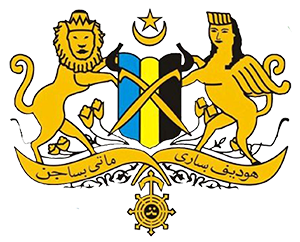
The Acheh Conflict Is Not About Separatism, but About Self-Determination

Few observers examine the Acheh conflict from a perspective other than “secession from Indonesian sovereignty.” In reality, the fluctuating relationship between Acheh and the central government has long been marked by the failure to reach a genuine consensus that recognizes the profound differences in historical experience and cultural identity between Acheh and Indonesia. The persistent Acheh–Indonesia dichotomy has not been bridged through a welfare-oriented approach. Instead, Acheh has perceived the central government as unilaterally exploiting Acheh’s natural resources solely for the benefit of political elites in Jakarta. At the same time, Acheh has consistently regarded its contributions to the anti-colonial struggle and its early support for Indonesian independence as evidence of Achehnese nationalism and commitment to being part of Indonesia. Yet Acheh was later subsumed into North Sumatra, and its economy deteriorated as national budget allocations became increasingly concentrated in Java. Recurrent accusations that the Indonesian government marginalizes Acheh’s interests have thus become a major trigger of contemporary conflict in Acheh.
Following the peace agreement between the central government and the Darul Islam rebellion under the leadership of Daud Beureueh, Acheh–central government relations were relatively calm. In the early 1970s, however, public discontent began to surface in response to President Soeharto’s centralized and authoritarian leadership. Relations were tested again when the Soeharto administration turned its attention to Acheh’s natural wealth. As oil and gas exploration expanded in Acheh to serve the interests of a small Jakarta-based elite, Hasan Tiro emerged and proclaimed the establishment of the Acheh Sumatra National Liberation Front (ASNLF/GAM) on 4 December 1976. Unlike its predecessor Darul Islam, the demands of the Free Acheh Movement were not religious in nature. Rather, they emphasized nationalism grounded in claims of territorial sovereignty, rooted in Acheh’s cultural identity and historical existence prior to Indonesian independence.
Drawing on his background as a diplomat, Hasan Tiro articulated Acheh’s struggle through the concept of “successor states.” He set out Acheh’s claim to historical territorial sovereignty in his book Perkara dan Alasan Perjuangan Angkatan Acheh Sumatra Merdeka. In this work, he cited the Larousse Grand Dictionnaire Universelle, which described the Kingdom of Acheh as “the most powerful nation in the Malay World or the East Indies at the end of the sixteenth century and until the mid-seventeenth century.” Professor Wilfred Cantwell Smith similarly wrote that in the sixteenth century the Islamic world had re-emerged in great splendor, with Muslims in Morocco, Istanbul, Isfahan, Agra, and Acheh acting as successful shapers of history.
Hasan Tiro emphasized two pivotal dates in Acheh’s war with the Netherlands: 26 March 1873, when the Dutch declared war on the independent and sovereign Kingdom of Acheh, and March 1942, when the Dutch were expelled from Acheh. The first Dutch assault, led by General Köhler, was decisively defeated by Achehnese forces, and Köhler himself was killed in Kutaraja. The second assault, under General van Swieten, began on 25 December 1873 with far greater force than the first, yet it too suffered defeat—an outcome later acknowledged by van Swieten in his own writings. In January 1874, shortly after landing on the Acheh coast, van Swieten announced to the world that he had annexed the Kingdom of Acheh and incorporated it into the Dutch East Indies (later Indonesia). This declaration was intended to restore Dutch prestige after repeated humiliations at the hands of the Achehnese. Van Swieten subsequently became known for the “Illegal Annexation of Acheh,” and he later admitted that he had never succeeded in conquering Acheh, asking that he no longer be called the “Conqueror of Acheh.”
When the Acheh issue is viewed not merely as a matter of separatism but through Hasan Tiro’s concept of a “successor state,” grounded in claims of pre-independence territorial sovereignty and UN decolonization law, the 2005 Helsinki Memorandum of Understanding can be understood as a political compromise. The agreement offered a form of self-government, granting Acheh broad authority to govern itself within the framework of the Indonesian state, including the establishment of local political parties to channel Achehnese political aspirations democratically. However, such arrangements require genuine political will from the Indonesian government to address Acheh’s underdevelopment relative to other provinces.
President Prabowo’s political decision not to declare national disaster status following deforestation floods and landslides in Sumatra and Acheh has become a sensitive issue, fueling mass demonstrations and the re-emergence of conflict symbols such as the GAM flag. These protests cannot be seen solely as demands for disaster status; they have also revived anti-Indonesia sentiments and been stimulated by external Achehnese resistance elements abroad (ASNLF). Acheh thus remains highly sensitive when linked to Hasan Tiro’s successor-state doctrine and claims of territorial sovereignty. From this perspective, the core grievance is the colonial decision to incorporate Acheh into the Dutch East Indies, which is argued to have violated international law. This historical sovereignty claim does not implicate Indonesia, which at the time had not yet achieved independence. Moreover, ASNLF’s renewed status as a permanent member of UNPO, based in and funded by the Dutch government, underscores the continuing relevance of successor-state ideas. Literally interpreted, successor states imply a strategy to reclaim Acheh’s sovereignty through a “continuation state.” This helps explain why GAM factions insist on maintaining the Wali Nanggroe institution, envisaged as a monarchical governing entity representing a continuation of Acheh’s former sovereign sultanate.
Given Acheh’s complex and multidimensional dynamics, special attention is required from the Prabowo administration—attention that avoids top-down, one-size-fits-all policies. Since the era of President Soekarno, Acheh has been described as a “capital region” because of its extraordinary natural wealth, making it unsurprising that major powers view Acheh as highly attractive. Acheh must be safeguarded so that it benefits both its people and Indonesia as a whole. Acheh should not become, as the saying goes, “a beautiful princess who is courted all her life but never married, eventually growing old and losing her allure.”
According to the Achehnese intellectual Prof. Kamaruzzaman Bustamam Ahmad, throughout the long history of the archipelago’s civilization, Acheh has never been merely a geographic region at Indonesia’s western edge. It has been a space of consciousness, where knowledge and spiritual experience merge in a single breath. He encapsulates this legacy in the concept of “Achehnology,” aimed at reviving Acheh’s once-vibrant epistemic tradition that has been obscured by historical change and global hegemonic forces. Achehnology teaches not only how to view Acheh, but how to listen to Acheh—listening to the values that have long echoed among its mountains, rivers, and oceans, witnesses to the Achehnese journey. Achehnology thus offers an important reference for the Indonesian government in fostering national harmony at the western edge of the archipelago.
Author: Sri Radjasa, M.BA (Intelligence Analyst)
Original article was published in bahasa at https://liputanrakyat.com/konflik-aceh-bukan-soal-saparatisme-tapi-perkara-self-determination/
No comments:
Post a Comment